
Expert Guidance to Achieve Enterprise-Level Agility & Speed
Gain expert intelligence and experience in all aspects of agile necessary to achieve enterprise agility in an era characterized by constant change. Cutter’s community of international experts provides new insight and research, published nearly daily, and virtual and live events that enable agility throughout the organization.
Insight
This program developed by Cutter Senior Consultant Jon Ward employs an apprenticeship style of blended learning that includes theory and practice to provide a clear, pragmatic understanding of the art of agile coaching over the course of fourteen weeks. Participants will gain a deep understanding of core agile conventions and benefit from the practical application of observation, analysis of team behavior and performance, and the implementation of a range of interventions based upon agile wisdom.
Companies around the globe are quickly moving to a fully distributed model, many without the training and preparation needed to ensure their teams achieve and sustain success. Led by Cutter Consortium Senior Consultant John Heintz, these four virtual workshops will help your organization boost its distributed software team performance, enabling your software teams to survive and thrive in dispersed environments.
Created for Virtual Delivery
Shed light on a critical aspect of the quality-performance connection that is too often overlooked.
Would your organization benefit from business executives who foster overall operational stability, while at the same time use a wide array of options for handling uncertainty? How about a line staff that is empowered to deal with routines decisively? Of course it would. With expert guidance from Cutter Consortium Senior Consultant Hillel Glazer, it can.
Twice the product in half the time.
Agile development is best known in the software world, where projects are easily understood as iterative. But until now, it hasn't been leveraged in developing industrial products. The new Industrial Agile Framework brings the benefits of Agile methods to industrial product development.
Consulting
Technical Due Diligence for Acquisitions
Cutter Consortium’s Technical Due Diligence for Acquisitions ensures an unbiased assessment of the software, software architecture, technology, security, and technology skills of your potential acquisition. Discover the value and SWOTs of your target company’s current-state systems.
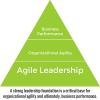

Don MacIntyre has led large and small organizations through successful transformations. And now you can benefit from his on-the-job experience. Don MacIntyre’s Agile Leadership training is designed to help leaders make Agility a priority, enabling their organizations to transition quickly to new ways of doing business.

Optimize your Big Data investments, decision making, and performance.


Cutter’s Senior Consultants are experts in training management teams how to both meet the needs of the Agile development organization and pursue the strategic goals of the business. At the end of this two-day Agile Management session, your executives and managers will know how to balance empowerment with governance, align goals and metrics up and down the organization, and determine the exact amount of agility (or stability!) your organization needs to support its business objectives.