

Business Transformation Requires Transformational Leaders
Leadership and teaming skills are front and center in times of rapid change. Meet today’s constant disruption head on with expert guidance in leadership, business strategy, transformation, and innovation. Whether the disruption du jour is a digitally-driven upending of traditional business models, the pandemic-driven end to business as usual, or the change-driven challenge of staffing that meets your transformation plans — you’ll be prepared with cutting edge techniques and expert knowledge that enable strategic leadership.
Subscribe to Arthur D. Little's Culture & Leadership Newsletter
Insight
Executive Update
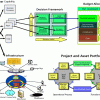
EA to AE: Enterprise Architecture to Assets for the Enterprise
Many corporations and public-sector organizations are struggling with the increasingly rapid changes in the business and political environment. Market conditions, cost constraints, and technology implementations often bring stress to an IT organization. One of the most significant stress points is the lack of IT management's ability to effectively gain support for an enterprise architecture (EA) and provide a roadmap to generate asset value from IT investments.


It has been a month since I wrote the first part of this Advisor in which I suggested that governments may need to understand the underlying sources of financial risk before they kick off yet another rescue plan (see "Before Moving to Another Rescue Plan, Review Your Risks," 6 November 2008).


Executive Update
Getting Closer to the Center of Action in Innovation
IT has proven itself a catalyst for creating new ways to engage customers, build sales channel relationships, and sell products and services. Enabling new forms and methods of collaboration is where IT has shone quite conspicuously, as professionals are now equipped with the tools to meet, confer, and share ideas from across the hall or across the continent in real time.


Everyone has a perspective about return on investment (ROI). Lots of calculations, models, and algorithms allegedly precisely measure the impact of alternative technology investments. There is strategic ROI and tactical ROI; there is "soft" ROI and "hard" ROI. There are as many ROIs out there as there are RBIs in the major league. What do we make of the ROI smorgasbord?


IT shops generate oodles and oodles of metrics. IT hardware and software can spit out hundreds of operational metrics, mostly to monitor system performance and diagnose system errors. On the hardware side, routers, switches, and data devices produce metrics that let operators infer the volume and kind of usage patterns at work.


Organizations of all sizes across every industry are facing unprecedented business challenges that are forcing them to rethink how they operate. However, many IT and corporate decision makers are still hesitant to put aside traditional software and systems in order to more effectively perform day-to-day operations and improve their ability to achieve long-term objectives.