

Strategic advice to leverage new technologies
Technology is at the heart of nearly every enterprise, enabling new business models and strategies, and serving as the catalyst to industry convergence. Leveraging the right technology can improve business outcomes, providing intelligence and insights that help you make more informed and accurate decisions. From finding patterns in data through data science, to curating relevant insights with data analytics, to the predictive abilities and innumerable applications of AI, to solving challenging business problems with ML, NLP, and knowledge graphs, technology has brought decision-making to a more intelligent level. Keep pace with the technology trends, opportunities, applications, and real-world use cases that will move your organization closer to its transformation and business goals.
Insight
In this article, we present lessons learned about the characteristics of an Agile architecture that enabled an organization to develop its architecture in an Agile manner and continue to rapidly deliver features when more stringent quality attribute requirements emerged.
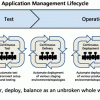
Agile teams rally around the theme of "eliminating waste." DevOps teams rally around the theme of "breaking down organizational pillars." In both, freeing up resources to do work that delivers value to users/customers is paramount. The benefits (and limitations) of the practices that result from these themes need to be understood to execute the practices successfully. In this article, we focus on one aspect: applying automation. Automation is an obvious way to free up resources and increase agility, because it replaces the need for humans to perform certain repetitive tasks, it is not a constrained resource in the way that headcount is, and it typically executes tasks faster and more repeatably than humans can.
If what you mean by "Agile architecture" is software architecture compatible with Agile development methodologies, then you'll likely end up with higher-quality software, but it won't be any better able to support the organization's agility requirements than any other software. For that you need a new architecture paradigm.
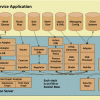


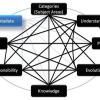

In this Update, we examine what leading architects use to manage effective communication regarding enterprise architecture. We start by looking at the factors needed to create a good Architecture Communication Framework.



With greater clarity on "True North," effective measurement, and transparency, this Executive Update demonstrates how we can apply Agile methods to BI applications in a way that ties directly to customer value.