Strategic advice to leverage new technologies
Technology is at the heart of nearly every enterprise, enabling new business models and strategies, and serving as the catalyst to industry convergence. Leveraging the right technology can improve business outcomes, providing intelligence and insights that help you make more informed and accurate decisions. From finding patterns in data through data science, to curating relevant insights with data analytics, to the predictive abilities and innumerable applications of AI, to solving challenging business problems with ML, NLP, and knowledge graphs, technology has brought decision-making to a more intelligent level. Keep pace with the technology trends, opportunities, applications, and real-world use cases that will move your organization closer to its transformation and business goals.
Insight
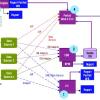
Data warehouse (DW), data mart, operational data store (ODS), and extract-transform-load (ETL) are the terms that come to mind when business intelligence (BI) or analytical reports are thought of. After all, these techniques have been around for a long time and are well proven. These architectures are very handy when there are too many silo databases, technology platforms, or proprietary applications in an organization.
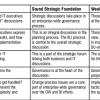

My objective in this article is to look at the discussion of BI with or without DW from a business rather than a technical or operational perspective. As we know, it is all too easy to let technical issues become the primary basis for IT decisions, and this isn't necessarily the only important perspective -- not least because it can bias the decision process from the perspective of business management ("Oh boy, there go the technocrats again!").
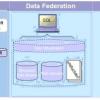

Mainstream, centralized business intelligence (BI) efforts can be overly expensive and slow to respond to rapidly evolving business requirements. These deficiencies have led to poorly served and unsatisfied users. However, serious negative consequences would result from the complete abandonment of central, integrated control of an enterprise data warehouse (EDW) and BI. We need to throw out the bureaucratic bathwater yet still keep the "EDW baby," and the best way to do that is to apply agile techniques and philosophies.




If you start with agile management, you will hit a point of frustration eventually: the more reliable your planning process becomes, the more frustrating are its results. You will find that your real velocity is way beyond what you would like it to be -- and probably beyond what you promised to your stakeholders.


Executive Update
Enterprise Mashup: What It Means to Your Organization -- Part II
This Executive Update is the second in a two-part series based on the results of a recent Cutter survey on the use of enterprise application mashups in organizations. 1 In Part I (Vol. 11, No. 7), we evaluated the survey responses to determine the extent of mashup use in organizations. In general, while the survey shows that interest in mashups is high, few indicate that mashups are being implemented in response to business needs.