

Strategic advice to leverage new technologies
Technology is at the heart of nearly every enterprise, enabling new business models and strategies, and serving as the catalyst to industry convergence. Leveraging the right technology can improve business outcomes, providing intelligence and insights that help you make more informed and accurate decisions. From finding patterns in data through data science, to curating relevant insights with data analytics, to the predictive abilities and innumerable applications of AI, to solving challenging business problems with ML, NLP, and knowledge graphs, technology has brought decision-making to a more intelligent level. Keep pace with the technology trends, opportunities, applications, and real-world use cases that will move your organization closer to its transformation and business goals.
Insight

Executive Update
Enterprise Mashup: What It Means to Your Organization -- Part I
This Executive Update is the first in a two-part series that looks at the results of a recent Cutter survey on the use of enterprise application mashups in organizations. 1 Here in Part I, we look at the different ways to define enterprise mashups, evaluate the use of and interest in mashups in organizations, and examine the use of best-of-breed resources.
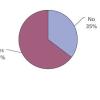

This survey investigated enterprise agility and its relationship to IT infrastructure. Nineteen percent of the 124 respondents come from companies with more than 10,000 employees, 28% from companies with between 1,000 and 10,000 employees, 33% from companies with between 100 and 1,000 employees, and the remainder from companies with less than 100 employees.

Abstract
Real-time location systems (RTLS) and wireless sensor networks (WSN) are now more practical and affordable, as they make use of existing wireless networks (such as 802.11) versus requiring proprietary networks. This Executive Report by Louis Sirico and Dann Anthony Maurno examines the state of the technology today, the practicalities of implementing wireless RTLS and WSN, and both the return on investment and cost of ownership of these technologies.
Companies that have been slow to adopt asset tracking systems and wireless sensor monitoring are finding the leap to these technologies much shorter now than in years past. The biggest barrier to deploying real-time location systems (RTLS) and wireless sensor networks (WSN) was always the cost of installing a dedicated wireless network. Enterprises were understandably slow to implement proprietary networks and technologies that were neither scalable nor product-agnostic.

While we are still trying to get our heads around the concepts and terminologies surrounding the Semantic Web, hints of a "Pragmatic Web" are finding their way into conversations and exchanges as some important new idea that is lurking in the background and hasn't quite yet made it onto the IT agenda.


"Are organizations better off building BI solutions when they need them and as quickly as they need them ... without a standardized and integrated DW?"
-- Larissa T. Moss, Guest Editor
Here we go again with another virtual solution! It didn't work for data warehousing -- what makes us think it will work for BI? We still have to address the data chaos in our organizations. BI without a DW won't get us there, but BI with a DW will.

Regardless of a company's size, if users are attempting to use transactional data to drive business decisions -- that is, if they're doing business intelligence (BI) -- they are implicitly or explicitly doing so by relying on data warehouse (DW) processes and practices. This in turn attests to the fact that any BI strategy must be tied to a DW strategy. Depending upon companies' unique conditions and circumstances, their BI strategies will utilize DW and DW tools at differing levels of sophistication.

When talking about business intelligence (BI), one thinks of a solution that transforms raw data into information that is needed by processes and people in the organization. This implies that the end user will demand some means of establishing how -- and whether -- this informational need is satisfied. In this article, we will call this means a contract.