



Business Transformation Requires Transformational Leaders
Leadership and teaming skills are front and center in times of rapid change. Meet today’s constant disruption head on with expert guidance in leadership, business strategy, transformation, and innovation. Whether the disruption du jour is a digitally-driven upending of traditional business models, the pandemic-driven end to business as usual, or the change-driven challenge of staffing that meets your transformation plans — you’ll be prepared with cutting edge techniques and expert knowledge that enable strategic leadership.
Subscribe to Arthur D. Little's Culture & Leadership Newsletter
Insight
All of us know the joy that one can experience from a good movie. Dramatic tension creates humor, intensity, excitement, and exhilaration. For a movie, that's a wonderful experience. In our work environment, that wonder is gone. We really don't want or need drama in our management work, and yet we encounter it on a ritual basis.
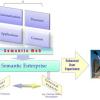


A business can gain significant value from the Semantic Web by drawing on its capability to combine and interoperate with several technologies and services, encompassing data warehouses, disparate operating systems, and myriad types of messaging. The resultant "cohesive" technological platform allows in-depth user participation and collaboration that also reveals new and meaningful relationships among information silos and applications that may not be obvious otherwise to the business.


Our inability to permanently kill very solvable problems is hurting the credibility and effectiveness of our profession. We cannot get out of our own way on so many issues, and it's not just the technology professionals I'm indicting here: just as many business professionals continue to misunderstand and mismanage the business technology relationship.


Back in June, I discussed how, after almost four years, BI software as a service (SaaS) provider LucidEra was considering calling it quits (see "As SaaS Provider Quits, What Happens to Its Data?" 30 June 2009).




This is the final Executive Update in a three-part series exploring Tim O'Reilly's statement that Web 2.0 applications must go "beyond the page metaphor of Web 1.0 to deliver rich user experiences." 1



The first priority in all wars is to live to fight another day. The economic war faced by most companies will be replete with reminders that survival is the near-term, full-time agenda. This is true for the IT department and for IT professionals, too. Being part of the survival plan requires a laserlike focus on eliminating any waste, frivolous activities, and all of the "nice-to-haves." Start by getting rid of the toys and hip trophies (e.g., BlackBerrys, iPhones, pagers).