


Business Transformation Requires Transformational Leaders
Leadership and teaming skills are front and center in times of rapid change. Meet today’s constant disruption head on with expert guidance in leadership, business strategy, transformation, and innovation. Whether the disruption du jour is a digitally-driven upending of traditional business models, the pandemic-driven end to business as usual, or the change-driven challenge of staffing that meets your transformation plans — you’ll be prepared with cutting edge techniques and expert knowledge that enable strategic leadership.
Subscribe to Arthur D. Little's Culture & Leadership Newsletter
Insight


In the first two parts of this Executive Update series on Cutter's annual survey of innovation practices, we described the enterprise innovation chain (value innovation, management innovation, business model innovation, and invention) and identified key findings of the research. 1 Here in Part III, we present additional detailed characteristics of organizations that assess themselves as successful innovators, efficiently managing their innovation processes.
Cloud computing is a prominent concept in the IT technology world. Cloud computing and software as a service (SaaS) promise fast return on investment, agility, improved scalability, availability, and more.


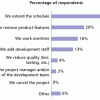

In 2002, the most common remedy for schedule problems was overtime. Now, six years later, a Cutter Consortium survey has revealed some interesting news: when projects run into scheduling problems, the two most common remedies are extending the schedule and reducing functionality, with overtime relegated to third place, followed by adding staff. This represents a distinct change from 2002, when Cutter conducted an identical survey. Cutter Consortium Senior Consultant E.M. Bennatan spearheaded both surveys.


I spent quite a bit of time studying martial arts in the past. While I wouldn't say that this made me more capable of coming out of a bar fight unscathed, the effort kept me (relatively) physically fit, introduced me to my future wife, and taught me some valuable lessons. Two lessons that translate quite nicely to the workplace are (1) the notion that you don't become agile overnight, and (2) true agility transcends such traits as flexibility.


IT is sort of caught in the middle of a debate. In one corner stands a group of researchers and enthusiasts who look at the marvels of how the human mind can make quick, accurate judgments and decisions. This group tends to look optimistically at the capabilities of the human mind to work effectively in the environment.