Strategic advice to leverage new technologies
Technology is at the heart of nearly every enterprise, enabling new business models and strategies, and serving as the catalyst to industry convergence. Leveraging the right technology can improve business outcomes, providing intelligence and insights that help you make more informed and accurate decisions. From finding patterns in data through data science, to curating relevant insights with data analytics, to the predictive abilities and innumerable applications of AI, to solving challenging business problems with ML, NLP, and knowledge graphs, technology has brought decision-making to a more intelligent level. Keep pace with the technology trends, opportunities, applications, and real-world use cases that will move your organization closer to its transformation and business goals.
Insight
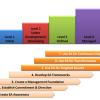
It is relatively easy to develop architectural capability through the first few levels of maturity. But it is the higher levels of maturity that deliver the most value and benefit from enterprise architecture (EA) efforts. In this Executive Report, we look at EA maturity, focusing on jumping the maturity gap and making the transition from average to excellent. We reveal the real issues behind the barrier and show how EA teams can bridge this barrier to reach higher levels of maturity.
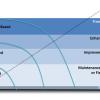
Roger Evernden looks at EA maturity, focusing on jumping the maturity gap and making the transition from average to excellent. He reveals the real issues behind the barrier and show how EA teams can bridge this barrier to reach higher levels of maturity.




Given the major importance and impact of nonfunctional requirements (NFRs) on an operational system, it's worth focusing a bit more on them in the context of infrastructure and maintenance. These NFRs (often called "operational" requirements for obvious reasons) describe the many parameters of a system as it becomes operational.

Domain analysis has been defined as "the process of identifying and organizing knowledge about some class of problems -- the problem domain -- to support the description and solution of those problems." Increasingly, such domain knowledge has been seen as a prerequisite for architectural understanding of a domain.



In this recorded webinar, Cutter Senior Consultants Lynn Winterboer and Hubert Smits provide answers to questions commonly asked by product owners who need a deeper understanding of the art and science of acceptance criteria.


The relationship between mobile and analytics is far from simple, and it is loaded with opportunity. There's an extraordinary number of mergers and acquisitions in this area, and companies developing services include Google, IBM, Amazon, Facebook, all of the analytics firms, and a host of relative newcomers. Why is this?