



Strategic advice to leverage new technologies
Technology is at the heart of nearly every enterprise, enabling new business models and strategies, and serving as the catalyst to industry convergence. Leveraging the right technology can improve business outcomes, providing intelligence and insights that help you make more informed and accurate decisions. From finding patterns in data through data science, to curating relevant insights with data analytics, to the predictive abilities and innumerable applications of AI, to solving challenging business problems with ML, NLP, and knowledge graphs, technology has brought decision-making to a more intelligent level. Keep pace with the technology trends, opportunities, applications, and real-world use cases that will move your organization closer to its transformation and business goals.
Insight
Executive Update
The People Leg of the Stool: Will It Stay in School?
This Executive Update discusses some of the critical skills enterprises are short on and how they should go about meeting the demand.
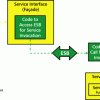

This Update examines a key reason why the application of these and other architectural patterns is not as widespread as we would like and uses successful examples from industry to discuss how to address the problem.


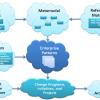
Enterprise patterns are increasingly being used by EA teams as an essential planning tool, bridging the gaps between strategic thinking and tactical investment priorities, between business capability needs and supporting technology solutions, and between organizational performance and enabling enterprise architecture.

Bring-your-own-device (BYOD) means allowing the use of personally owned devices to access enterprise architectural assets and public networks of functionality and data.The emerging Semantic Web and the related changes in Web and social technologies introduce a change that is widely called the "consumerization of IT."



BUSINESS TECHNOLOGY & DIGITAL TRANSFORMATION STRATEGIES VOL. 17, NO.