

Strategic advice to leverage new technologies
Technology is at the heart of nearly every enterprise, enabling new business models and strategies, and serving as the catalyst to industry convergence. Leveraging the right technology can improve business outcomes, providing intelligence and insights that help you make more informed and accurate decisions. From finding patterns in data through data science, to curating relevant insights with data analytics, to the predictive abilities and innumerable applications of AI, to solving challenging business problems with ML, NLP, and knowledge graphs, technology has brought decision-making to a more intelligent level. Keep pace with the technology trends, opportunities, applications, and real-world use cases that will move your organization closer to its transformation and business goals.
Insight
The latest industry development concerning the advancement of the IOT is the recent formation of the Industrial Internet Consortium (IIC) by AT&T, Cisco, GE, IBM, and Intel. This not-for-profit group (with an open membership) is important for several reasons.


DevOps falls fairly easily within existing models of enterprise governance, such as ITIL and CMMI. It does not require a new team or a new organization. DevOps does require, however, a new way of looking at things along with a careful review of how governance requirements can be adequately served within the new environment.
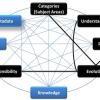

An Architecture Evolution Framework should be based on the same factors we use to create our other frameworks, and it needs to show all the options for evolving the architecture. EA is largely about the management of architecture in a way that supports enterprise adaptation, change, or transformation. This Update describes the factors used to create an Architecture Evolution Framework.
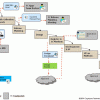

This Executive Update describes Cognizant's embrace of the small app concept, which evolved without significant investment in reengineering the legacy environment. Any organization can adopt this approach during its IT transformation journey.


Big Data, another alternative, is a very popular topic these days. While Part I described probabilistic decision making as based on "quantitative behavioral performance of the operation," one might reasonably ask how this differs from or can be accomplished with Big Data analysis. We'll address this observation in this Update.


In this Update Peter Kaminski looks at Maslow's hierarchy of needs as a tool for thinking about environmental and psychological elements that factor into the evolution of a Scrum team's development.