


Strategic advice to leverage new technologies
Technology is at the heart of nearly every enterprise, enabling new business models and strategies, and serving as the catalyst to industry convergence. Leveraging the right technology can improve business outcomes, providing intelligence and insights that help you make more informed and accurate decisions. From finding patterns in data through data science, to curating relevant insights with data analytics, to the predictive abilities and innumerable applications of AI, to solving challenging business problems with ML, NLP, and knowledge graphs, technology has brought decision-making to a more intelligent level. Keep pace with the technology trends, opportunities, applications, and real-world use cases that will move your organization closer to its transformation and business goals.
Insight
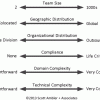

What scaling factors should we consider when tailoring our approach to Agile solution delivery? Several years ago, while working with IBM customers around the world to adopt and scale Agile, Scott developed the Agile Scaling Model (ASM) to help answer this question.







As has been our tradition for the last several years, we've compiled the five most intriguing articles published by the Business & Enterprise Architecture practice for today's Advisor. How did we come up with this list? We chose the articles that garnered the most feedback from Cutter Members and clients and those that created controversy among Cutter Senior Consultants and Fellows.
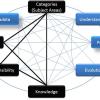
In the first two Executive Updates of this five-part series,1 we looked at frameworks for architecture content and the architecture development process.



Once again, the end of the year has snuck up! That means it’s time for our annual Cutter Predicts … series. Below, Cutter Fellows and Senior Consultants showcase their visions of 2014 (and in some cases, beyond).
All Gov’t Levels to Search for Cost-Effective Operational Stability by Mark PetersonThis coming year, government leaders will be looking for the most cost-effective means of operational stability for their level of government.