

Strategic advice to leverage new technologies
Technology is at the heart of nearly every enterprise, enabling new business models and strategies, and serving as the catalyst to industry convergence. Leveraging the right technology can improve business outcomes, providing intelligence and insights that help you make more informed and accurate decisions. From finding patterns in data through data science, to curating relevant insights with data analytics, to the predictive abilities and innumerable applications of AI, to solving challenging business problems with ML, NLP, and knowledge graphs, technology has brought decision-making to a more intelligent level. Keep pace with the technology trends, opportunities, applications, and real-world use cases that will move your organization closer to its transformation and business goals.
Insight
Abstract
This Executive Report by Dr. Laurence Lock Lee focuses on the relationship aspects of business intelligence (BI). First, we examine the radical changes that are being experienced in today's business environment that potentially could render many existing BI solutions obsolete.
Conventional business intelligence (BI) has evolved from an age when the "factory" was the dominant business infrastructure and computers were employed to accelerate factory processes.


In recent Advisors, I have talked about data security and perimeter security (see "Are You at the Controls? Do You Know Where Your Data Is?" 10 June 2009 and "Is Your Perimeter Secure?" 17 June 2009).

Abstract
In the days before computers, businesspeople designed, tested, and deployed their own business systems. Then along came IT, with its huge benefits, but application development had to be done by specialists in a separate IT organization. Is this separation -- the "business-IT divide" -- permanent?


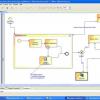

Business process management (BPM) is a business science applied by organizations to evaluate various aspects of how work is completed. Today, the term implies incorporating methods based on technology and nontechnology for completing that work. This term is also used by some vendors to describe new and/or updated products that provide automated workflow technology, for the most part, within a service-oriented architecture (SOA). This Executive Update discusses a decision framework for evaluating BPM technologies.


In a recent Agile Product & Project Management E-Mail Advisor (see "Service-Oriented Agile Projects -- Contradiction or Necessity?" 4 June 2009), I assert that "agile projects have often struggled with delivering ...