


Strategic advice to leverage new technologies
Technology is at the heart of nearly every enterprise, enabling new business models and strategies, and serving as the catalyst to industry convergence. Leveraging the right technology can improve business outcomes, providing intelligence and insights that help you make more informed and accurate decisions. From finding patterns in data through data science, to curating relevant insights with data analytics, to the predictive abilities and innumerable applications of AI, to solving challenging business problems with ML, NLP, and knowledge graphs, technology has brought decision-making to a more intelligent level. Keep pace with the technology trends, opportunities, applications, and real-world use cases that will move your organization closer to its transformation and business goals.
Insight



I've recently been observing a group of people attempting to develop a local food system for their community. What strikes me is that the principles of enterprise architecture (EA) that I've learned and used over the years are entirely relevant to this endeavor, despite the fact that IT has no role in it whatsoever.


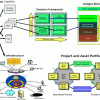
Executive Update
EA to AE: Enterprise Architecture to Assets for the Enterprise
Many corporations and public-sector organizations are struggling with the increasingly rapid changes in the business and political environment. Market conditions, cost constraints, and technology implementations often bring stress to an IT organization. One of the most significant stress points is the lack of IT management's ability to effectively gain support for an enterprise architecture (EA) and provide a roadmap to generate asset value from IT investments.



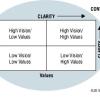
The world of business is at one of its lowest ebbs, with the global economy currently in a dire state. The obvious questions that many seem to be asking are, "Why did we get into such a mess? Where exactly is the problem? Who created the problem? How did it happen?" All these are questions that can be explored endlessly, with no definitive answer in sight.
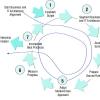

ALIGNMENT: A TREND
Over the past few years, business and IT leaders have practiced and published a myriad of concepts, philosophies, and principles of business-IT alignment. For many practitioners, it has been an unavoidable trend. In most cases, the incentive for their alignment initiatives has been directly related to establishing, organizing, and prioritizing specific business and IT strategies.