


Strategic advice to leverage new technologies
Technology is at the heart of nearly every enterprise, enabling new business models and strategies, and serving as the catalyst to industry convergence. Leveraging the right technology can improve business outcomes, providing intelligence and insights that help you make more informed and accurate decisions. From finding patterns in data through data science, to curating relevant insights with data analytics, to the predictive abilities and innumerable applications of AI, to solving challenging business problems with ML, NLP, and knowledge graphs, technology has brought decision-making to a more intelligent level. Keep pace with the technology trends, opportunities, applications, and real-world use cases that will move your organization closer to its transformation and business goals.
Insight
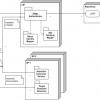
Security Assertion Markup Language (SAML) is an XML-based standard for exchanging authentication and authorization data between security domains. SAML is a product of the OASIS Security Services Technical Committee. The single most important problem that SAML was created to solve is the Web browser single sign-on (SSO). However, there are limitations to SAML 1.1 for that purpose. In fact, the problem that SAML 1.1 solves more efficiently is the authentication and authorization of SOAP Web services by using SAML as a WS-Security token.



View the Webinar (SWF recording)
NOTE: Viewing the Webinar requires the use of Adobe Flash Player 8 or higher (Adobe Flash Player 9 or higher for Linux and Solaris) (download the player from the Adobe Web site).
A follow-on to the wildly popular Cutter IT Journal issue of the same title, this webinar will help you better understand the implications of applying semantic web technologies to business problem domains where traditional enterprise systems have fallen short, such as BI, data mining, and CRM.


In my last Advisor ("How EA Shapes Urban/Transportation Planning," 7 October 2009), I restated some of the reasons that my colleagues and I have chosen urban (and transportation) planning as the model for thinking about EA while developing the Business Enterprise Architecture Modeling (BEAM) methodology.


I've said for some time now that the use of mashups in the enterprise would increase, especially when it comes to their use for BI and other applications that support decisions. One reason for this is that the technology has been evolving rapidly and vendors focusing on mashups have been growing in number. End-user organizations have also expressed a definite interest in using mashups.
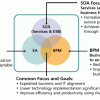

Although some business and IT practitioners would not consider SOA to be the "next big thing" anymore -- as they progress to a new set of emerging technologies -- most practitioners would still agree that SOA has evolved during this decade to become one of the most effective architectural approaches for consistent information exchange or data sharing.