



Strategic advice to leverage new technologies
Technology is at the heart of nearly every enterprise, enabling new business models and strategies, and serving as the catalyst to industry convergence. Leveraging the right technology can improve business outcomes, providing intelligence and insights that help you make more informed and accurate decisions. From finding patterns in data through data science, to curating relevant insights with data analytics, to the predictive abilities and innumerable applications of AI, to solving challenging business problems with ML, NLP, and knowledge graphs, technology has brought decision-making to a more intelligent level. Keep pace with the technology trends, opportunities, applications, and real-world use cases that will move your organization closer to its transformation and business goals.
Insight
The Internet is undergoing a rapid transformation from a web of hyperlinked documents to a web of semantically linked data. Recent observations lead me to believe we're seeing the emergence of what may qualify as Web 3.0 (or Semantic Web) applications.1 These applications are consumers and providers of semantically linked data. For the purposes of this Executive Update, I will refer to this new generation of Internet applications as semantically aware applications (SAAs).2

The Internet is undergoing a rapid transformation from a web of hyperlinked documents to a web of semantically linked data. Recent observations lead me to believe we're seeing the emergence of what may qualify as Web 3.0 (or Semantic Web) applications.1 These applications are consumers and providers of semantically linked data.




Microsoft has stepped up its efforts to become a serious enterprise data warehouse player with the introduction of its SQL Server Fast Track Data Warehouse (SSFTDW) offerings -- a set of reference architectures for data warehousing available on pretested, preconfigured standard hardware from Bull, Dell, and HP.


(Editor's note: This Executive Update was revised in 2019.)
In Part I of this Executive Update series, I examined the notion of project volatility and set forth the assumptions that underlie my own project planning approach.1 Here in Part II, I delve more deeply into the definition of project volatility and the use of a project-volatility metric.
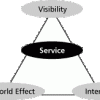
Executive Report
Service-Oriented Architecture: Foundational Elements
Abstract
"Service-oriented architecture" (SOA) is a powerful term regularly abused by its constant reference to developmental technologies rather than its architectural approach. This Executive Report by Dr. Amit K. Maitra discusses SOA in the context of "services" as the term applies to architecture and to "architecture" as it applies to exposing the services.
Executive Summary
Service-Oriented Architecture: Foundational Elements
The term "service-oriented architecture" (SOA) covers a wide range of definitions, applications, and approaches to implementation. A broad view of SOA encompasses business services, enterprise agility, and business transformation. A more restricted view treats it as the application and technology architectures, which limits its scope to strictly an IT concept.
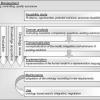

Abstract
Ontology engineering is now a desirable skill for professionals working in IT as well as for managers who have to weigh the costs of related projects. It consists of a complex combination of specialized activities and is a bit of an art as well as a science.