Strategic advice to leverage new technologies
Technology is at the heart of nearly every enterprise, enabling new business models and strategies, and serving as the catalyst to industry convergence. Leveraging the right technology can improve business outcomes, providing intelligence and insights that help you make more informed and accurate decisions. From finding patterns in data through data science, to curating relevant insights with data analytics, to the predictive abilities and innumerable applications of AI, to solving challenging business problems with ML, NLP, and knowledge graphs, technology has brought decision-making to a more intelligent level. Keep pace with the technology trends, opportunities, applications, and real-world use cases that will move your organization closer to its transformation and business goals.
Insight


The rise of business architecture can be directly attributed not only to the continued failure to develop good business requirements (i.e., requirements that actually represent the business), but also to the change in the role of the business analyst. In 1995, the Standish Group first published its Chaos Report, which looked at the success and failure criteria of IT projects. The report listed the top 10 factors that caused projects to be challenged.
REAL-WORLD EXPERIENCE
In this article, I describe an operating model for business alignment drawn from 27 years of experience, working for both consultancies and major end-user organizations in a variety of industries. The key points that come out of this experience are:
-
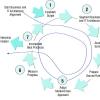
Alignment among all parties involved in business change is the issue: the business consists of multiple parties that need to be aligned; IT is just one of these parties.
The world of business is at one of its lowest ebbs, with the global economy currently in a dire state. The obvious questions that many seem to be asking are, "Why did we get into such a mess? Where exactly is the problem? Who created the problem? How did it happen?" All these are questions that can be explored endlessly, with no definitive answer in sight.

ALIGNMENT: A TREND
Over the past few years, business and IT leaders have practiced and published a myriad of concepts, philosophies, and principles of business-IT alignment. For many practitioners, it has been an unavoidable trend. In most cases, the incentive for their alignment initiatives has been directly related to establishing, organizing, and prioritizing specific business and IT strategies.
The organizational change that began with the Industrial Revolution and accelerated via Henry Ford's introduction of mass production and the assembly line has had a profound impact on the organizational structure of businesses up to the present time. Many current companies have built what amount to assembly lines, where specialists perform specific tasks along the path to producing a product or service that is delivered to their customers.



While enterprise information technology architecture (EITA) has been used successfully to improve operational efficiencies in many organizations, few have been successful with leveraging EITA as a strategic value-creation tool. We contend that one reason for this is that in many instances, EITA lacks the business relevance and context necessary to align IT direction with business strategy in other than an incidental fashion. Enterprise business architecture (EBA) holds promise as a source of requirements for EITA.


Earlier this month, Gartner issued a press release saying that SOA adoption is falling dramatically. With the election finally over, news is slow, and it seems everyone and his or her uncle has jumped on this revelation with something to say on the topic. Not wanting to be left out of the party, I feel it my duty to chime in. Of course, I'm not unbiased.