


Business Transformation Requires Transformational Leaders
Leadership and teaming skills are front and center in times of rapid change. Meet today’s constant disruption head on with expert guidance in leadership, business strategy, transformation, and innovation. Whether the disruption du jour is a digitally-driven upending of traditional business models, the pandemic-driven end to business as usual, or the change-driven challenge of staffing that meets your transformation plans — you’ll be prepared with cutting edge techniques and expert knowledge that enable strategic leadership.
Subscribe to Arthur D. Little's Culture & Leadership Newsletter
Insight

There is plenty of evidence that organizations can achieve cost savings through outsourcing. But there are limits to providers working smarter to achieve the holy trinity of (for the client) dramatic savings and higher KPIs and (for the provider) a decent profit margin.
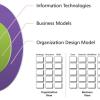

We can think of an "enterprise" as any human undertaking, endeavor, or project. Any enterprise comprises three areas: (1) an organization, (2) the businesses operated by the organization, and (3) any technologies or equipment needed to support the organization’s businesses. Enterprise architecture (EA) needs to support all three. It is striking that as EA has evolved over the last 40 years, there has been a parallel development: that of organization design (OD). In this Executive Report, we look at what EA can learn from OD models.

We can think of an "enterprise" as any human undertaking, endeavor, or project. Whenever people collaborate in an enterprise, it requires three distinct constituents: (1) the business or operations performed by the enterprise, (2) the technologies or infrastructure that supports the enterprise, and (3) the organization or management that directs and governs the enterprise. To genuinely provide an holistic understanding of an enterprise from an architectural and systems perspective, enterprise architecture (EA) must cover all three areas: organization, business, and technology. In the accompanying Executive Report, we look at what EA can learn from organization design (OD) models.

There is a simple principle that would keep us from making grievous errors due to incomplete (or worse, inaccurate) data. Make "data-informed decisions" instead of the more common catchphrase of "data-driven decisions." The difference is an extremely important nuance.

Psychology has provided interesting insights into human behavior and how to mitigate the challenges of running an enterprise. This Executive Report discusses how CIOs can successfully leverage these psychological concepts to foster a healthy business-IT relationship.
The relationship between business and IT is similar to a married couple setting up and running a home. The "home" in this case is an "enterprise."

In some companies, leaders may have a hard time participating in conversations because of how they feel they are influencing the conversation. When they speak, people will tend to go along with them, so they find themselves speaking last to allow everyone else to speak; ironically, this also gives them the last word.


The barriers between business and IT are long-standing. Historically, the business would ask IT to deliver on their requests. IT felt the requests were misguided or wrong. So IT built what they wanted to build. Of course, the response from the business was, "That's not what we wanted! We can't sell that!" However, it doesn't stop there. IT began gold-plating some features, adding features they thought customers would want (or things that IT really wanted to build) and not building other things.