



Strategic advice to leverage new technologies
Technology is at the heart of nearly every enterprise, enabling new business models and strategies, and serving as the catalyst to industry convergence. Leveraging the right technology can improve business outcomes, providing intelligence and insights that help you make more informed and accurate decisions. From finding patterns in data through data science, to curating relevant insights with data analytics, to the predictive abilities and innumerable applications of AI, to solving challenging business problems with ML, NLP, and knowledge graphs, technology has brought decision-making to a more intelligent level. Keep pace with the technology trends, opportunities, applications, and real-world use cases that will move your organization closer to its transformation and business goals.
Insight
In my previous Advisor (see "Realizing the Benefits of Agile Outsourcing"), I discussed the critical ingredients for successful projects with outsourced Agile development teams from a customer's perspective.

Executive Update
Game On: Utilizing Gamification in Software Development
A TRIVIAL PURSUIT FOR IT ORGANIZATIONS?
Gamification refers to the relatively new trend of applying game design elements to nongame contexts to drive user motivation and participation.
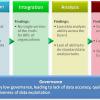
For the purpose of Cutter Consortium's latest CBR survey, we define Agile data analytics as "the application of Agile methods to data analytics initiatives in order to increase flexibility, provide faster 'time to value,' and support collaborative relationships between business users and IT developers." Further still, as described by Agile data analytics expert Ken Collier, Agile methods are built on a "simple set of sensible values and principles but require a high degree of discipline and rigor to properly execute" and as a process Agile falls somewhere in the "middle betwe
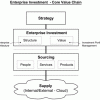
Enterprise architecture is a strategic capability, not a support activity.


Last month I discussed the US National Security Agency's (NSA) electronic surveillance and data gathering practices (aka "Prism"), which were leaked by Edward Snowden, a former NSA contractor (with Booz Allen Hamilton) and previous CIA employee, to the Guardian and Washington Post news organizations (see
Executive Update
Five Challenges in Implementing Systems for Retail Analytics
Designing a technology platform that enables analytics demands a different mind-set as compared to designing one for operational needs. While defining the enterprise architecture (both data and application) is primarily about laying down the right dots pertinent to the business, analytics is about connecting those dots and sometimes ignoring existing connections for insights.

The impact of the mobile software product grows every day, reaching a point in which mobile devices become one of the most important platforms for the distribution and utilization of user-oriented software. Mobile application stores host thousands of apps, reporting millions of downloads per day.


The collaborative nature of Agile projects has exposed participants to opportunities to experience a number of ingredients associated with group coherence (GC) in the research literature. We call these "Agile embedded ingredients," as they surface in Agile work. We present four here and discuss both their Agile appearance and the research about them. They are: (1) the commonly shared goal, (2) shared leadership, (3) trust and respect, and (4) practice.